Who found the size illusions?
A memory scientist who didn’t publish, a psychologist who wrote about a duck-rabbit, and an artist-scientist who built a crooked room.
Hermann Ebbinghaus
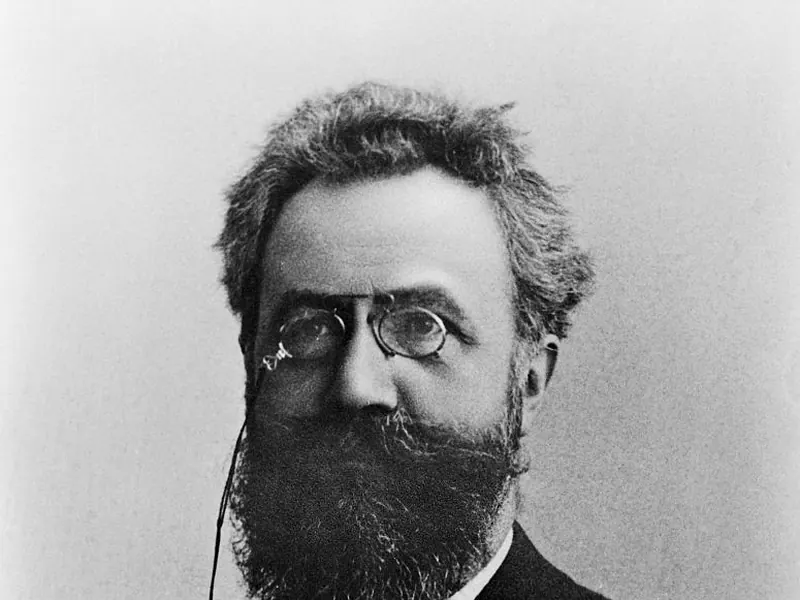
Hermann Ebbinghaus was born on 24 January 1850 in Barmen, Germany, and died on 26 February 1909 in Halle. Britannica: Hermann Ebbinghaus It is named after Hermann Ebbinghaus, a pioneer of memory research, who probably found it in the 1890s but never published it. Michael Bach: Ebbinghaus illusion
Ebbinghaus’s famous “forgetting curve” appeared in his book on memory in 1885. Britannica: Hermann Ebbinghaus After memory, Ebbinghaus turned to colour vision, and in 1890 co-founded a psychology journal with the physicist Arthur König. Britannica: Hermann Ebbinghaus
Joseph Jastrow
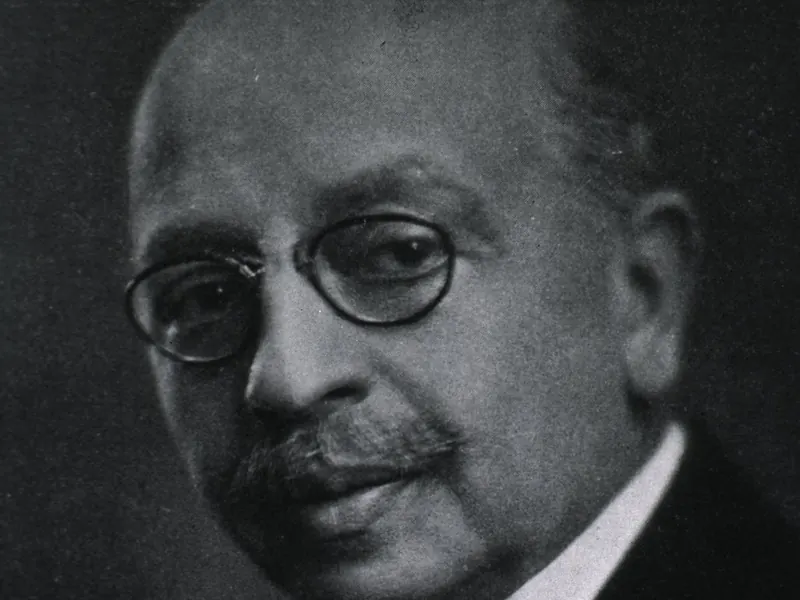
Joseph Jastrow described it in 1891, and it still isn’t well understood. Michael Bach: Jastrow illusion Jastrow also described the famous duck-rabbit picture. Michael Bach: Jastrow illusion
Adelbert Ames Jr
Adelbert Ames Jr was born in 1880 and worked on visual sensation and perception; he is best known for the Ames room. Exploratorium: Ames Chair (Science Snack) Ames and Egon Brunswik argued that we perceive under the strong influence of learned assumptions. Britannica: Adelbert Ames, Jr.
Way back
Aristotle wrote that the sun and stars seem bigger when rising and setting; he blamed the air. Michael Bach: Moon illusion Hermann von Helmholtz credited the size-constancy explanation to Ptolemy. Michael Bach: Moon illusion
A timeline
- 1855 Johann Oppel wrote about geometric-optical illusions in 1855. Michael Bach: T-illusion
- 1865 The Delboeuf illusion was published by Franz Joseph Delboeuf in 1865: a disc inside a ring only a little bigger looks larger than the same disc inside a much bigger ring. Michael Bach: Delboeuf illusion
- 1889 The Müller-Lyer illusion dates from 1889. Michael Bach: Müller-Lyer illusion
- 1890s It is named after Hermann Ebbinghaus, a pioneer of memory research, who probably found it in the 1890s but never published it. Michael Bach: Ebbinghaus illusion
- 1891 Joseph Jastrow described it in 1891, and it still isn’t well understood. Michael Bach: Jastrow illusion
- 1901 Edward Titchener printed it in a 1901 textbook, without claiming it as his, so it is also called the Titchener illusion. Michael Bach: Ebbinghaus illusion
- 1911 Mario Ponzo’s 1911 paper turns out not to contain the famous Ponzo picture at all; it is mainly about an illusion of touch. Michael Bach: Size constancy
- 1952 The Ames demonstrations were written up by William Ittelson in 1952. Michael Bach: Ames window
- 1962 In 1962 Irvin Rock and Lloyd Kaufman tested the illusion with artificial moons and found the moon’s apparent size depends on whether you can see terrain. Michael Bach: Moon illusion
- 1968 The perspective explanation (Richard Gregory, 1968): fins pointing in look like the near corner of an object, fins pointing out like the far corner of a room. Michael Bach: Müller-Lyer illusion
- 1991 Robert Day and Erica Stecher described the sine illusion in 1991 and linked it to the Müller-Lyer illusion. Michael Bach: Sine illusion
- 1995 A 1995 study suggested the illusion fools the eye but not the grasping hand. After years of repeat experiments, Michael Bach now sees agreement that it affects grasping and seeing alike. Michael Bach: Ebbinghaus illusion
- 2014 A moving version, made by Christopher Blair, Gideon Caplovitz and Ryan Mruczek, makes the effect even stronger and won the 2014 Visual Illusion Contest. Michael Bach: Dynamic Ebbinghaus illusion
- 2021 A 2021 review of Ponzo-like illusions found that a modernised version of Gregory’s explanation fits the experiments best. Michael Bach: Size constancy
- 2025 The perspective explanation has had critics (Segall and colleagues in the 1960s), and a 2025 paper by Amir and Firestone pushed back on the idea that the illusion is a product of culture. Michael Bach: Müller-Lyer illusion
Britannica lists the Müller-Lyer illusion (lines that look different lengths) and the moon illusion among the classic visual illusions. Britannica: Illusion Britannica’s own panel of classic illusions includes “lines are equal in length”, “circles are equal in size” and “black dots are equal in size”. Britannica: Illusion
Next: myths vs facts →