Size illusions: don’t trust your eyes, trust a ruler.
Two lines of exactly the same length that refuse to look it. A moon that swells on the horizon. A room where people grow as they walk. Here’s how the classic size illusions work, how to test them at home, and how far out your own eyes are. Every fact is checked against Michael Bach’s illusion collection, Encyclopaedia Britannica and the Exploratorium.

Measure the Trick
Six classic size illusions, one slider each. Drag until the orange shape looks exactly the same size as the dark one, lock it in, and we measure how far out your eyes were. Then the trick gets switched off so you can see the truth.
The drawings and the scoring are ours; the explanations come from Michael Bach’s Optical Illusions & Visual Phenomena and Britannica, linked on every reveal.
The short version
Britannica: the size of the image on the retina is one of the clues to distance; the larger the image, the closer we judge the object to be. Britannica: Space perception
Assuming size constancy, the visual system works out how big something is as its size on the retina multiplied by how far away it assumes it is. Michael Bach: Shepard’s “Subterranean Terror” Size constancy is always at work. It is why someone walking away from you doesn’t seem to shrink into a dwarf. Michael Bach: Size constancy
Richard Gregory called this “inappropriate constancy”: the cars are pasted in flat, but the brain assumes they follow the perspective like everything else, and corrects for distance. Michael Bach: Size constancy
Delboeuf and Ebbinghaus are “size contrast” illusions; illusions that rely on depth and perspective belong to a different family. Michael Bach: Delboeuf illusion
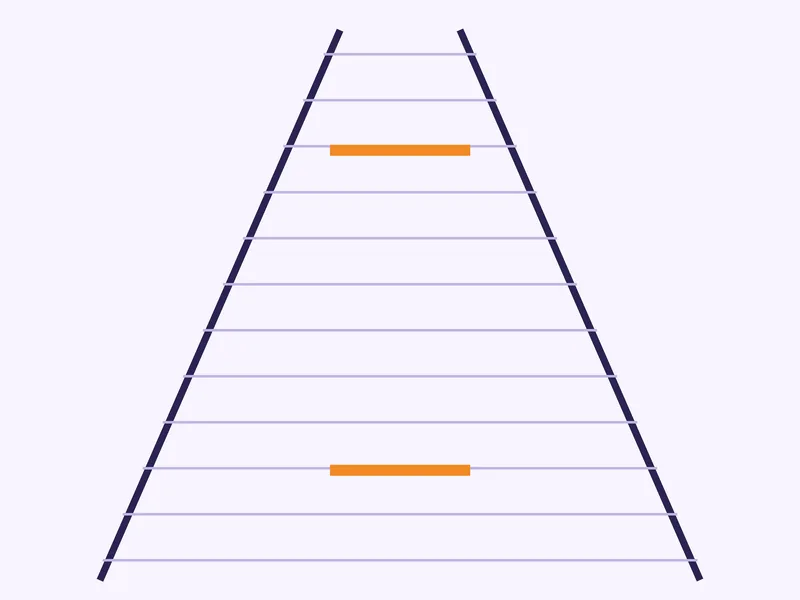
Explore the illusions
 Müller-Lyer arrowsThe famous fins, from 1889.
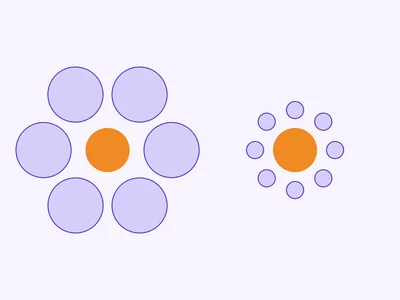 Ebbinghaus & DelboeufCircles that grow and shrink.
 Ponzo & distanceRailway lines and size constancy.
 The moon illusionWhy it looks huge on the horizon.
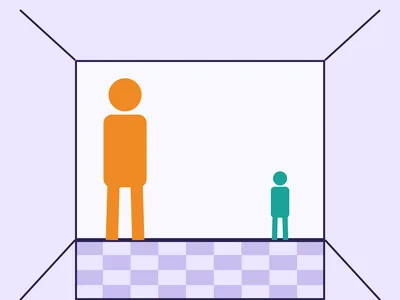 The Ames roomGiants, hobbits and a crooked room.
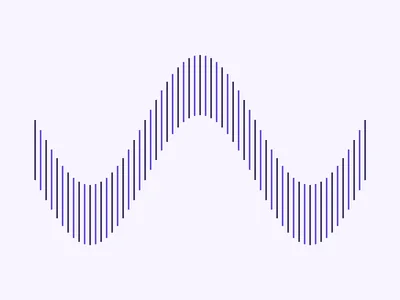
 T, Jastrow & sineUp beats across, and curves that lie.
 ExperimentsCoins, the moon and a shoebox.
 Who found themThe people behind the tricks.
 All the factsEvery fact, every source.
Tile pictures are credited on their pages and on the credits page.
Things to play
- Measure the TrickSlide until it looks equal, then find out how far out you were.
- Same or Different?Ten quick calls. Sometimes they’re identical. Sometimes they’re not.
- Ames Room WalkWalk across the trick room and watch yourself shrink.
- Size Illusions QuizTen questions at a time, every answer sourced.
- Illusion PairsA memory game with our illusion drawings.

Enjoyed being fooled? Help keep this site going.
This site is hand-built, fact-checked and free to use. If a game, an experiment or one of Useless’s notes made you look twice, a little support keeps it going and helps the network grow.
Size illusion printables
Fact-checked PDFs in A4 and US Letter, sold as instant downloads from the ReallyByte store.
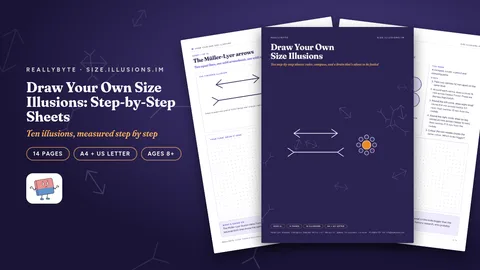
Draw Your Own Size Illusions: Step-by-Step Sheets
Ten classic size illusions to draw with a ruler and compass, from the Müller-Lyer arrows to the Ponzo railway, each with measured steps, a practice grid and the trick explained
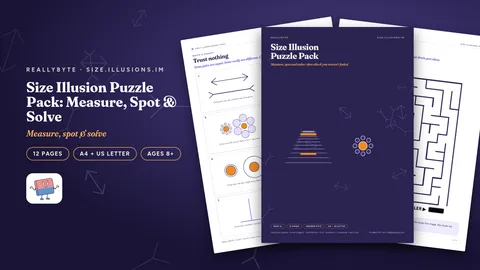
Size Illusion Puzzle Pack: Measure, Spot & Solve
Guess-then-measure challenges, “which is bigger?” puzzles, a maze, a word search and a crossword, all with answer keys
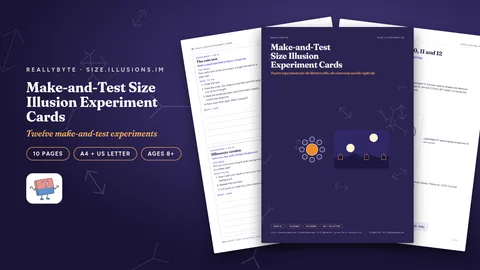
Make-and-Test Size Illusion Experiment Cards
Twelve experiment cards for the kitchen table or the classroom: the coin test, the moon trace, a shoebox peep-show and more, each with what to look for and why
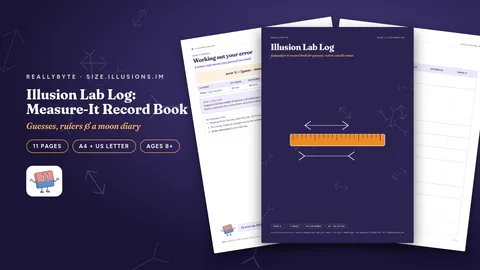
Illusion Lab Log: Measure-It Record Book
Record your guesses and your measurements, work out your error, test friends and family, and keep a moon diary
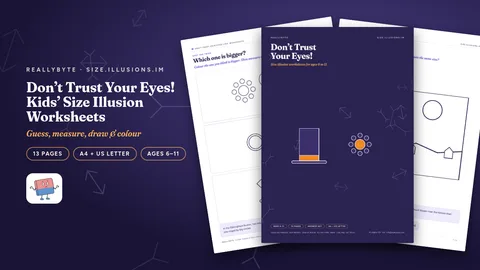
Don’t Trust Your Eyes! Kids’ Size Illusion Worksheets
For ages 6 to 11: guess and measure, spot the trick, draw an illusion, illusion maths, a maze and colouring, with answer keys
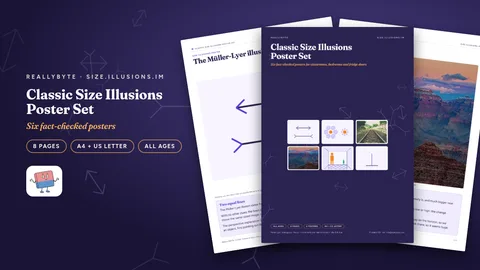
Classic Size Illusions Poster Set
Six fact-checked posters: Müller-Lyer, Ebbinghaus, Ponzo, the moon illusion, the Ames room and the T illusion
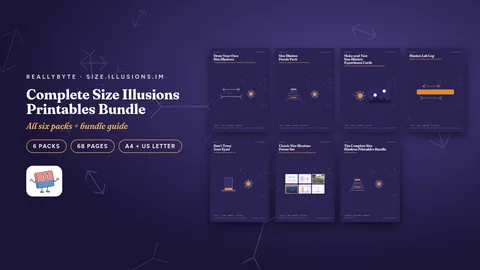 Best value
The Complete Size Illusions Printables Bundle
All six packs plus a guide, A4 and US Letter, in one download.